


Start a Company

Last Updated: September 19, 2025
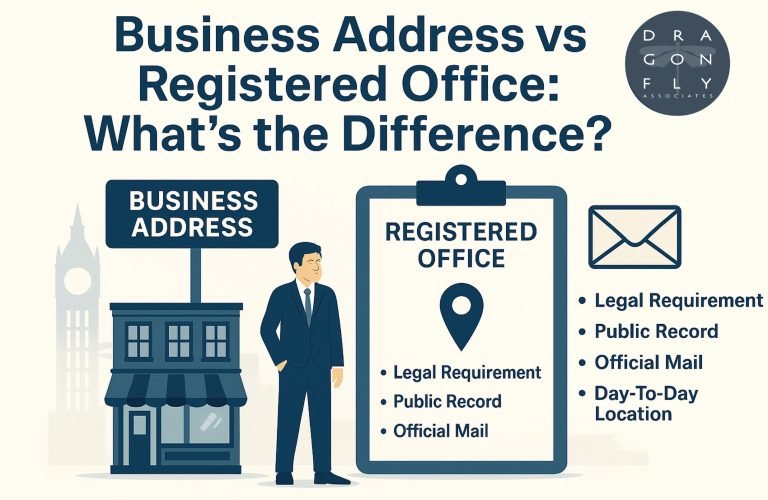
When forming or managing a UK limited company, it’s important to understand the difference between your registered office and business address. While both may involve mail and company records, they serve different legal and operational purposes.In this article, we explain how each address is used, what’s required by law, and how Dragonfly Associates supports clients with secure address services—subject to agreement.

What Is a Registered Office?

A registered office is your company’s official legal address, used by Companies House and HMRC for formal correspondence.

Key points:

  • It must be a real UK postal address (not a PO Box)
  • It must be in the same country where the company is incorporated (England & Wales, Scotland, or Northern Ireland)
  • It is publicly visible on the Companies House register
  • It is where statutory mail (e.g. notices, legal documents) is delivered

Dragonfly Associates offers registered office services for clients who prefer not to use their personal or trading address.

What Is a Business Address?

What Is a Business Address?

A business address is where your company conducts its day-to-day operations. It may be:

  • A physical office or retail location
  • A shared workspace or virtual office
  • The address you use on marketing materials, invoices, or email signatures

It is not a legal requirement to have a separate business address. However, having one helps present a professional image and keep your registered office private.
We provide business address services to clients needing a dedicated UK presence.

Key Differences at a Glance

Feature Registered Office Business Address
Legally required? Yes No
Public on Companies House? Yes No (unless used elsewhere)
Mail received? Official government mail Client or general mail
Can be a residential home? Yes (but not recommended) Yes (but may affect privacy)
Used for trading activity? No Yes

Why Keep Them Separate?

Separating your registered office and business address can help you:

  • Protect your personal address from being listed online
  • Create a more professional or London-based image
  • Receive different types of mail at different locations
  • Delegate statutory mail handling to a trusted provider

Dragonfly Associates can act as both your registered office and business address provider, subject to agreement.

Changing Your Registered Office or Business Address

To update your registered office:

  • File form AD01 with Companies House
  • Ensure the new address meets legal requirements
  • Notify HMRC and relevant stakeholders

To update your business address:

  • Simply begin using the new address on invoices, website, and communications
  • Inform clients, suppliers, and partners
  • No Companies House filing is needed

We handle registered office updates and offer mail scanning or forwarding services for both address types.

Frequently Asked Questions

Can I use one address for both purposes?

Yes, provided it meets the legal criteria for a registered office. However, many companies choose to separate them for privacy and operational reasons.

Do I need to use a UK address provider?

If you’re based outside the UK or want a professional address, using a provider like Dragonfly Associates ensures your mail is handled promptly and securely.

Can I change my addresses later?

Yes. Registered office changes must be filed with Companies House. Business addresses can be changed without any formal filings.

Use the Right Address for the Right Purpose

Your registered office and business address serve different functions—legal vs operational. Understanding the distinction helps protect your privacy, improve professionalism, and ensure compliance.

Dragonfly Associates provides registered office and business address services with optional mail forwarding, scanning, and compliance support—offered under clearly defined packages.

To set up or change your company address today, contact our team.

Last Updated: September 19, 2025
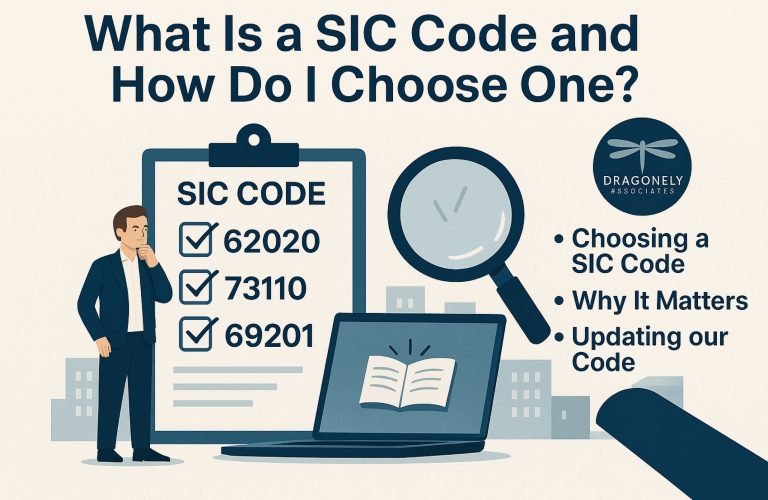
When forming or managing a UK limited company, you’ll be asked to select at least one SIC code—a standardised number that describes your business activity. It may seem like a small administrative step, but it affects how your company is classified, taxed, and presented.This article explains what SIC codes are, how to select the right one, and how Dragonfly Associates helps clients choose and update their codes—subject to agreement.

What Is a SIC Code?

SIC stands for Standard Industrial Classification. It’s a 5-digit code used by Companies House and HMRC to categorise your business activity.

  • 62020: Information technology consultancy activities
  • 73110: Advertising agencies
  • 69201: Accounting and auditing activities

You must choose at least one SIC code when:

  • Incorporating a company
  • Filing your annual Confirmation Statement (CS01)

You can change your code as your business evolves.

Why Do SIC Codes Matter?

  • Help HMRC assess tax treatment and eligibility for reliefs
  • Define which regulations may apply to your industry
  • Are used in statistical reports and funding applications
  • Appear on the public Companies House register

Choosing an incorrect SIC code won’t result in penalties, but it can cause confusion and misrepresent your business.
We help clients select accurate SIC codes based on their core operations and long-term strategy.

How to Choose the Right SIC Code

How to Choose the Right SIC Code

There are over 600 SIC codes in the Companies House list (based on the 2007 version). To choose correctly:

  1. Identify your main source of revenue or activity
  2. Use the official SIC code list from GOV.UK
  3. If you have multiple activities, choose up to 4 relevant codes
  4. Select the code that most accurately reflects your core business

If no code seems to fit perfectly, choose the closest match. We help clarify this for clients during formation or CS01 filings.

Multiple Business Activities

You can select up to four SIC codes if your company operates across different sectors. For example:

  • A software company offering both IT consultancy (62020) and hosting services (63110)
  • A retailer that also provides in-house manufacturing

We help structure SIC code selections to reflect your business accurately without overcomplicating your filings.

Updating Your SIC Code

You can change or update your SIC code:

  • By filing your next Confirmation Statement (CS01)
  • Or sooner, by submitting an early CS01 with updated information

We handle these updates as part of our registered office or company compliance services, depending on your selected plan.

Frequently Asked Questions

Can I operate outside my SIC code activity?

Yes. SIC codes are primarily for classification—they do not limit your activities, provided they are lawful and within your Articles of Association.

Can I have no SIC code?

No. At least one SIC code is legally required when forming or maintaining a UK company.

Does HMRC use my SIC code for tax decisions?

It may be used for profiling or risk assessment, but it does not determine your tax rates directly. Still, accuracy is important.

Get Your Company Classification Right

Your SIC code is more than just a number—it’s part of how your business is identified by regulators, investors, and public records. Whether you’re forming a new company or updating an existing one, getting it right helps maintain credibility and compliance.

Dragonfly Associates supports clients in selecting and updating their SIC codes as part of our formation and annual compliance services—subject to agreement.

Need help identifying the correct SIC code? Contact our team today.

Last Updated: September 19, 2025

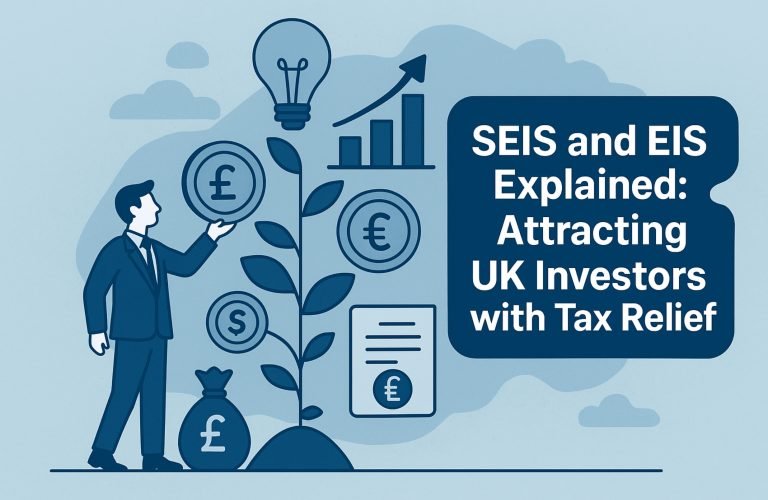
Raising early-stage capital can be challenging—but in the UK, the government offers powerful tax incentives to encourage investment in startups and growing companies.

The Seed Enterprise Investment Scheme (SEIS) and Enterprise Investment Scheme (EIS) provide generous tax reliefs to individuals who invest in qualifying businesses. This article explains what SEIS and EIS are, how they benefit both companies and investors, and how Dragonfly Associates supports applications and structuring—subject to agreement.

What Are SEIS and EIS?

Attracting UK Investors with Tax Relief – Dragonfly Associates

SEIS and EIS are government-backed schemes designed to encourage private investment in high-risk businesses:

  • SEIS: Supports early-stage businesses (typically less than 2 years old), with investments up to £250,000.
  • EIS: Supports more established growth companies, allowing investments up to £5 million per year.

Investors who put money into a qualifying SEIS or EIS company can claim generous tax reliefs against their income tax and capital gains.

What Are the Benefits to Investors?

If your company qualifies, investors can access:

SEIS (Seed Enterprise Investment Scheme):

  • 50% income tax relief (on up to £100,000 per year)
  • 100% capital gains tax exemption on sale (after 3 years)
  • Loss relief if the business fails
  • Capital gains reinvestment relief

EIS (Enterprise Investment Scheme):

  • 30% income tax relief (on up to £1 million per year)
  • Capital gains tax deferral
  • Inheritance tax relief (after 2 years)
  • Loss relief

These incentives can significantly increase the attractiveness of your company to UK-based angel investors and funds.

Company Eligibility: Can You Qualify?

SEIS and EIS eligibility depends on your company’s:

  • Age (SEIS: under 2 years, EIS: under 7 years typically)
  • Size (fewer than 25 full-time employees for SEIS, 250 for EIS)
  • Gross assets (less than £200,000 for SEIS, £15 million for EIS)
  • Business activity (must not fall under excluded sectors)
  • UK permanent establishment

The company must also have a genuine intention to grow and develop over time.

Investor Conditions

To claim the tax reliefs, investors must:

  • Be UK taxpayers
  • Hold the shares for at least 3 years
  • Not be connected to the company (e.g. not an employee or controlling shareholder)

Shares must be new ordinary shares, issued for cash and paid in full.

How to Apply: SEIS/EIS Advance Assurance

Before raising funds, many companies seek “advance assurance” from HMRC. This is a non-binding confirmation that your business appears to qualify.

Steps include:

  • Preparing a detailed application
  • Submitting a business plan, financial forecasts, cap table, and proposed investment terms
  • Waiting 4–6 weeks for HMRC feedback

Dragonfly Associates supports clients with advance assurance applications, investor communications, and final SEIS/EIS compliance filings—subject to agreement.

SEIS First, Then EIS

It’s common to raise a smaller amount under SEIS (e.g. friends and family, angels), then follow with a larger round under EIS.

We help structure the share rounds and ensure they are properly spaced and documented so as not to invalidate SEIS eligibility.

Frequently Asked Questions

Can non-UK companies qualify for SEIS/EIS?

No. The company must have a UK permanent establishment and meet all UK incorporation and control requirements.

Can I use both SEIS and EIS?

Yes. You can raise up to £250,000 under SEIS and then continue raising under EIS, provided the conditions are met.

Do I need to use a lawyer or accountant?

It’s strongly recommended. SEIS and EIS applications require careful planning and professional documentation. We offer assistance as part of our startup support services.

Make Your Startup Investment-Ready

SEIS and EIS aren’t just tax schemes—they’re powerful fundraising tools. If your company qualifies, they can open doors to serious investors looking for tax-efficient opportunities.

Dragonfly Associates helps you assess eligibility, secure advance assurance, and structure your share issues to support long-term compliance—available under clearly defined agreements.

To attract investors with confidence and stay legally compliant, contact us to begin your SEIS/EIS journey.

Last Updated: October 24, 2025
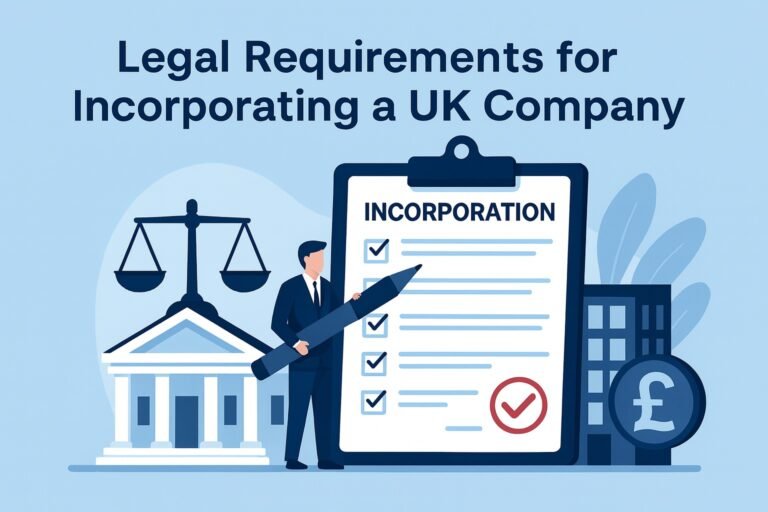
Forming a company in the United Kingdom is refreshingly straightforward—but it must be done properly. To be compliant from day one, directors must meet key legal obligations set by Companies House and HMRC.In this guide, we break down the essential legal requirements to incorporate a private limited company (Ltd) in the UK. Dragonfly Associates offers step-by-step support through this process, depending on your selected package.

1. Choose a Company Name That Complies with UK Law

The company name you choose must:

  • Be unique and not the same (or too similar) to any existing UK company
  • Avoid restricted or sensitive words like “Royal” or “Bank”
  • Not contain offensive or misleading language
  • Not infringe on trademarks

You can check for name availability on the Companies House website—or let Dragonfly Associates assist with availability searches and guidance as part of your formation package.

2. Appoint at Least One Director

By law, every UK limited company must have at least one director who is:

  • A natural person (not just a company)
  • At least 16 years old
  • Not currently disqualified from acting as a director
  • Not bankrupt (unless with court permission)

Directors are legally responsible for ensuring the company complies with accounting, tax, and reporting requirements. Dragonfly Associates provides director briefings and support on responsibilities where applicable.

3. Provide a Registered Office Address

Your registered office:

  • Must be a physical location in the UK
  • Will appear on the public record
  • Is where Companies House and HMRC send legal notices

If privacy is a concern, you can use a third-party address provider. Dragonfly Associates offers registered office and service address options, subject to agreement, to protect your residential address.

4. Define Shareholders and Share Structure

You must have:

  • At least one shareholder (can be the same person as the director)
  • An initial share structure (number of shares, value, and allocation)
  • A record of ownership (Persons of Significant Control register)

The initial shareholder(s) and share capital are documented in the company’s incorporation forms. Dragonfly Associates assists in defining and documenting these details during setup.

A close-up shot of a hand signing a document. This symbolises the commitment and agreement to the terms outlined in the Memorandum and Articles of Association.

5. Create a Memorandum and Articles of Association

These documents form your company’s constitutional foundation. They include:

  • The Memorandum: a statement from the initial shareholders agreeing to form the company
  • The Articles of Association: rules for running the company (e.g., decision-making, issuing shares)

Companies House provides model articles, but these can be customised. Dragonfly Associates provides standard or tailored documents, depending on the scope of service agreed upon.

6. Assign a SIC Code

You are required to choose a Standard Industrial Classification (SIC) code that best describes your business activity. You can select more than one if needed.

It’s important to select the correct code for statistical and regulatory purposes. We advise clients on code selection during the company formation process, where this support is included in their plan.

7. File the Incorporation with Companies House

You must submit Form IN01 electronically or by post. It includes:

  • Company name
  • Registered address
  • Director and shareholder details
  • Share structure
  • SIC code

Dragonfly Associates files electronic incorporations for most clients, allowing registration to be completed in as little as 3–6 hours. This service is included in our formation packages, subject to agreement.

8. Register for Corporation Tax

Every new company must register for Corporation Tax within 3 months of beginning trading (not necessarily from incorporation). You’ll need:

  • Your Unique Taxpayer Reference (UTR)
  • Your SIC code
  • Contact details of the company

Dragonfly Associates offers Corporation Tax registration services as part of its accounting and compliance support, depending on your selected plan.

9. Maintain Statutory Registers

From the date of incorporation, a company must keep updated records of:

  • Directors
  • Shareholders
  • Persons of Significant Control (PSC)
  • Share allotments and transfers

These must be available for inspection upon request. We assist clients with maintaining these registers where agreed in their compliance package.

Why Legal Accuracy Matters

Incorporation is not just paperwork—it’s a legal milestone. Errors or omissions can lead to:

  • Fines or penalties from Companies House
  • Delays in opening bank accounts
  • Tax filing issues
  • Liability concerns for directors

Dragonfly Associates ensures your incorporation is complete, compliant, and supported by experienced professionals—based on the scope and terms of our service agreement.

Frequently Asked Questions

Can I be both director and shareholder?

Yes, most single-person startups are formed this way.

Can I use my home address?

Yes, but it will be publicly visible. Most clients choose to use a professional address through their provider.

Can Dragonfly Associates handle all legal steps?

Yes, we offer full incorporation support, including documents, filings, and compliance guidance, depending on the plan or service package chosen.

Final Thoughts

Meeting the legal requirements of UK company formation isn’t difficult—but getting it right is critical. It affects your credibility, compliance, and ability to scale.

At Dragonfly Associates, we simplify the process by providing expert-led, contract-backed company formation services that ensure everything is in place from day one.

To learn more or get a quote for your incorporation, contact our team today.

Last Updated: September 16, 2025
If you’re looking to launch a new business—whether you’re based in the UK or abroad—the United Kingdom offers one of the most attractive environments in the world for entrepreneurs. With a streamlined registration process, competitive tax system, and a trusted legal framework, the UK is consistently ranked as one of the easiest places to start and operate a company.This article explores the key advantages of setting up in the UK and how Dragonfly Associates can help you get started, subject to service agreement.

1. World-Class Business Infrastructure

The UK combines modern infrastructure with centuries of commercial history. Its institutions—from banking to regulatory bodies—are mature, transparent, and designed to support both startups and global enterprises.

  • Clear legal protections for businesses and investors
  • International credibility as a business destination
  • Home to London, one of the world’s top financial centres

This level of maturity and access makes it ideal for both local entrepreneurs and foreign founders looking to establish a European footprint.

2. Fast and Simple Company Registration

The UK makes it easy to launch a business:

  • You can register a limited company in under 24 hours
  • There is no requirement for UK residency
  • A single individual can be both director and shareholder
  • Filing requirements and costs are relatively low

Dragonfly Associates facilitates same-day company formation for clients, including preparation of key documents and submission to Companies House, depending on the chosen package.

3. Access to a Strong Talent Pool

The UK is home to a highly educated, multilingual workforce. Whether you’re hiring locally or remotely, you’ll find talent across all sectors, particularly in:

  • Technology and digital services
  • Finance and legal professions
  • Logistics and manufacturing
  • Marketing, design, and creative industries

Employment support services, such as payroll setup and employer registration, are available from Dragonfly Associates where applicable.

4. Attractive for International Founders

One of the UK’s standout features is that you don’t need to live in the country to open a company. Many non-resident directors use the UK as a base for global operations.

  • No requirement for local shareholders
  • Ability to operate remotely using UK addresses and virtual mail handling
  • Global trust in UK corporate structures
  • Access to UK banking (subject to bank approval)

Dragonfly Associates offers Non-Resident Packages designed for international clients, including business address services, company formation, and optional mail forwarding—available by contractual arrangement.

5. Competitive Tax Environment

The UK offers a straightforward, globally competitive tax regime:

  • Corporation Tax is among the lowest in the G7
  • VAT is well understood and built into business systems
  • No capital requirements to start a private limited company

There are a variety of tax reliefs for small businesses and startups, including Research & Development (R&D) credits and reliefs for early-stage investment. We assist clients in understanding their tax obligations and, where agreed, can help with tax registrations, accounting, and compliance services.

6. Trusted and Recognised Business Presence

A professional handshake between two individuals in a business setting. This symbolises trust, partnership, and recognition in the business world.

Having a UK company lends credibility. Clients, investors, and partners around the world view UK businesses as professional, compliant, and reliable.

This is especially useful for:

  • Agencies and consultants selling internationally
  • Tech firms seeking funding
  • E-commerce sellers expanding into global markets

Even when operating remotely, you can project a local presence using a registered UK business address—available through Dragonfly Associates, depending on your selected service tier.

7. A Hub for Expansion

The UK is a springboard to wider markets. As a member of key global trade networks and with a highly connected logistics ecosystem, it’s ideal for businesses that plan to expand into:

  • The EU and Western Europe
  • The United States
  • Asia-Pacific markets

With English as the official language, global entrepreneurs find it easier to work with UK systems and professionals. Legal documents, contracts, and financial tools are all in English—no translation necessary.

How Dragonfly Associates Can Support You

Whether you’re UK-based or an international founder, Dragonfly Associates provides:

  • Company formation services for residents and non-residents
  • Registered office and service address in central London
  • Accounting, bookkeeping, and tax registration
  • Startup consulting and structuring advice

All services are delivered by our internal team, and availability depends on your selected plan or service agreement.

Frequently Asked Questions

Can I register a UK company if I live outside the UK?

Yes. The UK allows non-residents to own and direct UK limited companies. Many of our clients operate entirely from overseas, using our Non-Resident Packages.

Is it difficult to run a UK company from abroad?

Not if you have the right infrastructure in place. Dragonfly Associates provides digital documents, mail handling, and compliance support to help overseas directors manage their UK companies effectively.

Do I need a UK bank account?

Not to register the company, but you’ll likely need one to receive and send payments. We can provide guidance and introductions, though approval is always at the discretion of the bank.

Final Thoughts

The UK is one of the most flexible, secure, and well-connected countries in which to start a business. Its business culture, credibility, and efficiency make it an ideal launchpad for entrepreneurs around the world.

Dragonfly Associates is here to help make that possible—through formation, advisory, and compliance services, all delivered with clarity and care.

To learn more or begin the registration process, contact our team today.

Last Updated: September 16, 2025
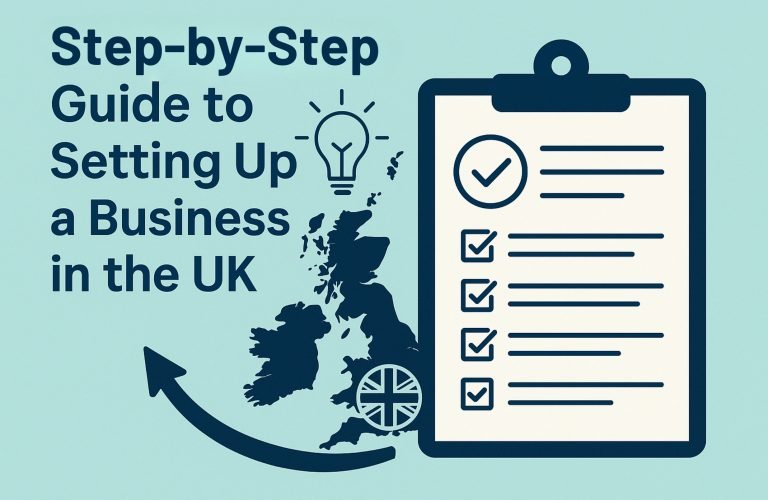
Starting a business in the UK is an exciting opportunity—and with the right guidance, it can be a smooth and rewarding process…

Step 1: Shape Your Business Idea and Plan

Every successful company starts with a clear idea and a plan to bring it to life. Before registering anything, take time to define:

  • What your business will offer
  • Who your customers are
  • Your pricing and delivery model
  • Startup costs and projected revenues
  • The level of funding (if any) you may need

If you’re unsure how to translate your idea into a workable model, Dragonfly Associates offers startup consultations…

Step 2: Choose a Legal Structure

Choosing the right structure impacts your taxes, liability, and regulatory responsibilities. In the UK, the most common options are:

  • Sole Trader — simple, fast to set up…
  • Limited Company (Ltd) — a separate legal entity…
  • LLP — ideal for shared professional services
  • Company Limited by Guarantee — used for charities

Most entrepreneurs choose a private limited company…

Step 3: Register Your Business

A screenshot or image of a government website related to business registration in the UK, showcasing how easy it is to start the process online.

Sole Trader

You must register for Self Assessment with HMRC…

Limited Company

You’ll need to:

  • Choose a company name (must be unique)
  • Provide a registered office address
  • Appoint at least one director and shareholder
  • Issue shares and define a company structure
  • Select a SIC code
  • Submit to Companies House

Dragonfly Associates handles company formation…

Step 4: Register for Taxes

Depending on your business structure, you may need to register for:

  • Corporation Tax
  • VAT
  • PAYE

We manage these registrations under compliance packages.

Step 5: Open a Business Bank Account

A dedicated account is vital for managing income and tax responsibilities…

Step 6: Establish Your Bookkeeping and Accounting Processes

  • Track revenue and costs
  • Issue and retain invoices
  • Prepare for tax submissions

These services are offered through our bookkeeping packages.

Step 7: Understand Ongoing Filing and Legal Duties

  • File annual Confirmation Statement
  • Submit company accounts
  • Maintain director/shareholder/PSC registers
  • Notify Companies House of changes

We offer compliance management to help with these tasks.

Why Work with Dragonfly Associates?

  • Company formation
  • Registered office and service address
  • Tax and payroll registration
  • VAT services
  • Ongoing bookkeeping and filing
  • Startup and expansion guidance

All services are tailored to your needs.

Frequently Asked Questions

Do I need to live in the UK to open a company?

No. Non-residents can register UK companies…

Is it difficult to manage the legal side?

Not with support. We handle most filings for you…

Can I get help switching from sole trader to limited company?

Yes. We help clients transition as they grow…

Get Started with Confidence

Starting a business in the UK doesn’t have to be overwhelming…

Contact us to explore your options or request a tailored quote for your business.

Last Updated: September 16, 2025
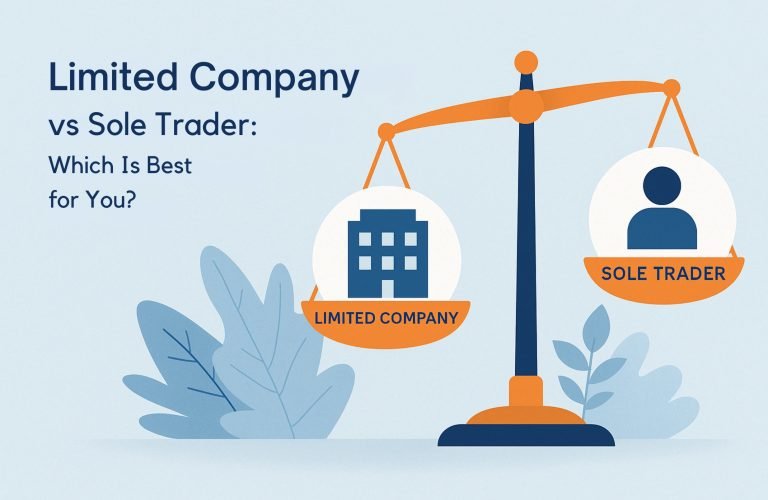
Choosing the right business structure at the start can have lasting consequences—on your taxes, legal responsibilities, credibility, and even your ability to grow.If you’re wondering whether to start as a sole trader or register a limited company, this article breaks down both options in plain English. By the end, you’ll be better equipped to choose the model that fits your goals. And with Dragonfly Associates, you’re never on your own—we provide all the services you need to get started, the right way.

Sole Trader: Simple, Flexible, but with Risk

A sole trader is the most straightforward way to start a business in the UK. It requires very little setup, minimal paperwork, and gives you complete control.

Benefits of Being a Sole Trader

  • Easy to set up — register for Self Assessment and start trading
  • Fewer legal and reporting obligations
  • Retain all profits (after tax)
  • Simple bookkeeping

This model works well for freelancers, consultants, tradespeople, or anyone starting small.

Downsides to Consider

  • Unlimited personal liability — if your business is sued or incurs debt, you are personally responsible
  • Less credibility — larger clients may hesitate to work with unregistered businesses
  • Harder to scale — funding and investment are more difficult to secure
  • Fewer tax planning options compared to companies

Limited Company: Professional, Secure, and Growth-Oriented

A limited company is a separate legal entity. It has its own bank account, financial records, and legal status. Directors manage it, and shareholders own it (even if that’s just you in both roles).

Advantages of a Limited Company

  • Limited liability — personal assets are protected
  • Potential tax efficiency — Corporation Tax is often lower than higher income tax bands
  • Greater access to funding and business credit
  • Enhanced brand image and legitimacy
  • Share ownership allows flexible business growth or exit

Responsibilities That Come With It

  • Must register with Companies House
  • Must submit annual accounts and confirmation statements
  • More administrative duties (though Dragonfly Associates can handle these for you)
  • Greater transparency — company data is public

A Quick Comparison Table

Feature Sole Trader Limited Company
Legal Status Not separate from owner Separate legal entity
Liability Unlimited personal risk Limited to company assets
Taxation Income Tax via Self Assessment Corporation Tax
Setup Time Minutes Hours (with Dragonfly)
Compliance Requirements Low Moderate to high
Privacy High (fewer public records) Moderate (director info published)
Business Image Basic Professional and credible


What Dragonfly Associates Recommends

  • Weigh the pros and cons of each structure
  • Understand their legal and tax implications
  • Form a limited company if that’s the right fit — in under 6 hours
  • Switch from sole trader to limited company later (if needed)

Whether you’re just getting started or scaling up, we offer tailored advice and full company formation services. We also provide startup support packages to guide you through the decision-making process with clarity and confidence.

Frequently Asked Questions

Frequently Asked Questions

Can I start as a sole trader and later form a company?

Absolutely. Many entrepreneurs start small and incorporate later, especially once they reach certain income thresholds or want limited liability.

Is it more expensive to run a limited company?

The costs are higher—but often offset by lower tax rates and greater growth opportunities. With Dragonfly Associates, you can keep setup and compliance costs low.

What structure do I need to raise investment?

A limited company is essential if you’re looking for outside funding, selling equity, or establishing credibility with institutional partners.

Final Thoughts: Choose What Supports Your Goals

Final Thoughts

If you’re testing a side hustle or running a small-scale operation, a sole trader setup may be the simplest starting point. But if you’re serious about scaling, protecting your assets, and projecting professionalism, forming a limited company makes strategic sense.

Let Us Help You Make the Right Move

Dragonfly Associates provides:

• Tailored startup consultations
• Affordable company formation services
• Long-term compliance and advisory support

Start smart. Stay protected. Grow with confidence.
Contact us now to take the next step in your journey.

Last Updated: September 16, 2025
Registering a limited company in the UK is a major step toward building a secure, credible, and potentially tax-efficient business. Whether you’re starting your first venture or expanding an existing one, a limited company offers protection and structure that other business types simply can’t.In this guide, we’ll walk you through the full process—and explain how Dragonfly Associates can take care of every step on your behalf, so you can focus on growing your business.

What Is a Limited Company—and Why Choose One?

A limited company is a legal structure where your business is treated as a separate entity. This means that:

  • Your personal assets are protected if the business runs into debt
  • You pay Corporation Tax on profits, which can be more efficient than Income Tax in many cases
  • Your company can build its own credit history, own property, and enter into contracts

It also gives your business more credibility in the eyes of clients, investors, and suppliers—especially when operating internationally.


Step-by-Step: Registering Your UK Limited Company

Step-by-Step: Registering Your UK Limited Company


1. Choose Your Company Name

This is your brand, your first impression, and it must be:

  • Unique (check against the Companies House database)
  • Free of restricted words (like “bank” or “royal”)
  • Not infringing on any trademarks
Tip: Dragonfly Associates offers instant name-checking and advice if you’re unsure.

2. Decide on a Company Structure

Most people opt for a Private Company Limited by Shares (Ltd), which means:

  • You’ll issue shares to shareholders (even if it’s just you)
  • You’ll have at least one director (again, it can be you)

Other options include:

  • Limited by Guarantee (ideal for non-profits)
  • LLP (for professional partnerships)

Not sure which suits your case? We’ll advise you based on your business model.

3. Provide Company Details

You’ll need to decide on:

  • A registered office address (this will appear on public record — use ours to protect your privacy)
  • A service address for directors (again, we offer this if needed)
  • The company’s SIC code (a number that describes your business activity)
  • The company’s share structure: how many shares and at what value?

Dragonfly Associates helps you fill out all this quickly via our online portal.

4. Appoint Directors and Shareholders

You need:

  • At least one director (18+, no criminal or bankruptcy restrictions)
  • At least one shareholder (can be the same as the director)

We’ll draft your Memorandum and Articles of Association and ensure you comply with all legal duties.

5. Submit to Companies House

Once everything is complete, we file the application electronically.

Turnaround: 3 to 6 working hours is typical.

You’ll receive your Certificate of Incorporation and all core documents in your secure client area.

What Documents Will You Get?

After formation, Dragonfly Associates provides:

  • Certificate of Incorporation
  • Memorandum & Articles of Association
  • Share Certificates
  • Company Register (digital or print)
  • Your unique company number and registration confirmation

These documents are essential for opening a business bank account and dealing with HMRC.

Our Services: Everything Under One Roof

Dragonfly Associates isn’t just a formation agent—we’re your long-term partner in compliance and growth. Our Company Formation packages include:

  • Name checking and legal setup
  • Registered office and service address
  • Share issuance and PSC register creation
  • Filing of your first confirmation statement
  • Ongoing reminders for compliance deadlines
  • VAT and PAYE registration on request

We also offer tailored packages for non-UK residents—including mail handling, tax guidance, and more.

Frequently Asked Questions

Do I need a UK address to open a company?

No. We provide a London-registered address as part of your package. Your actual location can be anywhere in the world.

Can I run the business alone?

Yes. You can be the sole director and sole shareholder. Many UK businesses start this way.

Will I need an accountant right away?

Not necessarily. Dragonfly Associates offers light-touch compliance for startups, with options to add bookkeeping and tax support as you grow.

Final Thoughts: Is a Limited Company Right for You?

Final Thoughts

If you want to grow your business beyond a side hustle—or protect your personal assets—a limited company is a smart move. It signals professionalism, builds trust, and opens doors to better funding, clients, and long-term planning.

Let’s Build Your Business

Dragonfly Associates can register your company today. We’ll handle the admin, guide you through the legal bits, and ensure everything is done correctly—first time.

Get started with your Company Formation now
Talk to our team for tailored advice

© All rights reserved. Made with love by Ottmann-Polignac

4tehrwq

Congratulations! This company name is available.

4tehrwq

Unfortunately, this name is not available for registration.
Please select another.